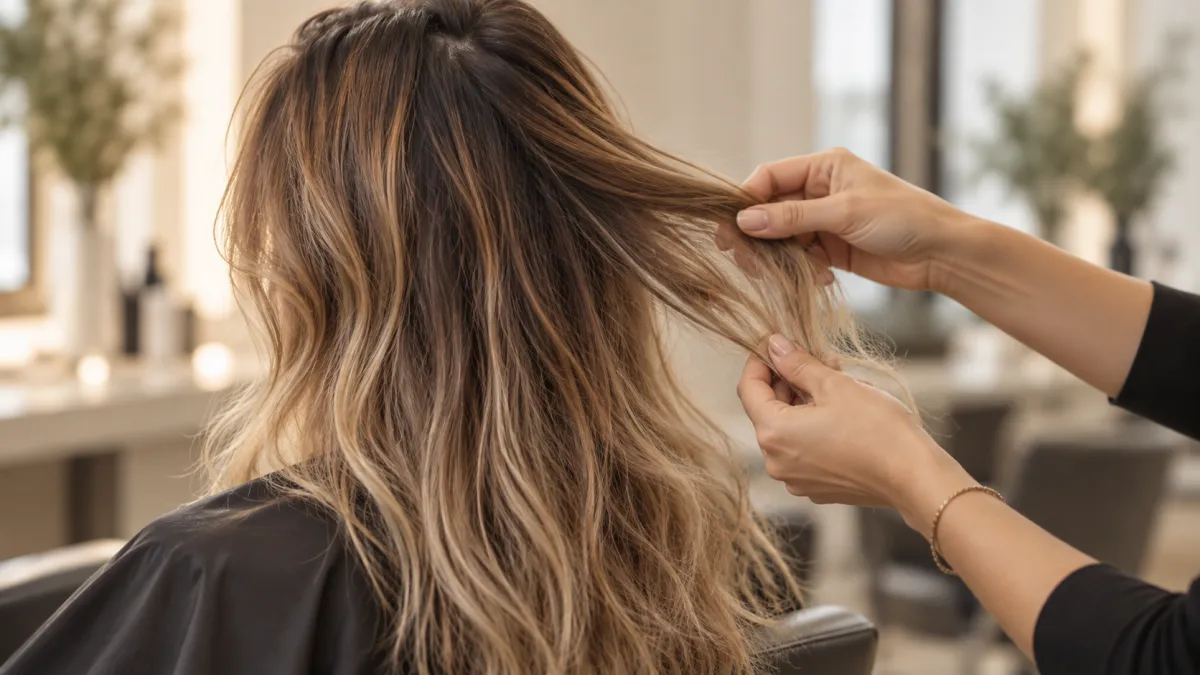
Hair can look natural while still holding several layers of old pigment. Knowing your color history helps me understand how your lengths may respond to a new service and where surprises could arise.
What Information Really Matters
Try to remember any at-home or salon color, lightening, henna, indigo, color-depositing masks and sprays. Approximate dates and photos of your previous color are helpful, too.
It’s especially important to mention at-home experiments with dark shades and direct dyes. They can show up as an uneven base during lightening, even if a long time has passed since the service.
How I Use This Information
I Compare Sections
Roots, mid-lengths and ends are assessed separately, as they may contain different amounts of pigment.
I Choose the Strength of the Formula
The formula and processing time depend on previous treatments and your hair’s current density.
I Plan a Strand Test
With a complex color history, a strand test helps reveal the true underlying tone and the condition of your hair after lightening.
I Determine the Steps
If a safe transition requires several appointments, we can discuss that before starting the main service.